How to Measure Your Eyeglass Size: Find Your Perfect Fit at MANOOSH.DE
Why is the right glasses size so important?
The glasses size not only affects comfort but also the overall appearance. Glasses that are too small press on the temples, while those that are too large slip down the nose. The perfect fit size ensures that the optical center of the lenses is exactly in front of the eyes – this is especially crucial for prescription lenses.
• Optimal wearing comfort: no pressure points, no slipping
• Correct visual performance: the optical center is exactly in front of the eyes
• Harmonious overall appearance: the glasses fit the width and shape of the face
How can you measure the glasses size?
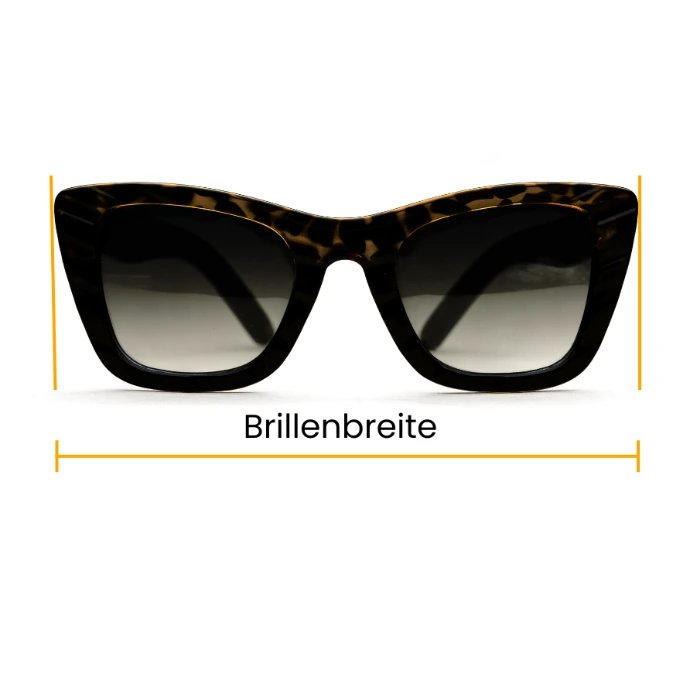
Measure glasses width.
The width of the glasses frame plays an important role in wearing comfort. If the glasses frame is too large, the glasses can easily slip off the nose. A too small frame can cause pressure on the temples. Therefore, the size of the glasses should match the width of the face.
The ideal glasses width can vary by about ±2 mm slightly.
For a rectangular pair of glasses with 138 mm width, variants between 136 and 140 mm can also fit comfortably.

Measure bridge width.
The bridge of the glasses connects the two lenses and should fit exactly to the width of your nose.The bridge width is measured from the inner edges of the frame.
Why is the bridge so important? If the glasses do not sit properly on the nose, they can slip. Then the optical center of the lenses is no longer correct, which affects the quality of vision.The right bridge width ensures comfort and optimal vision all day long. This is especially important for glasses without flexible nose pads.
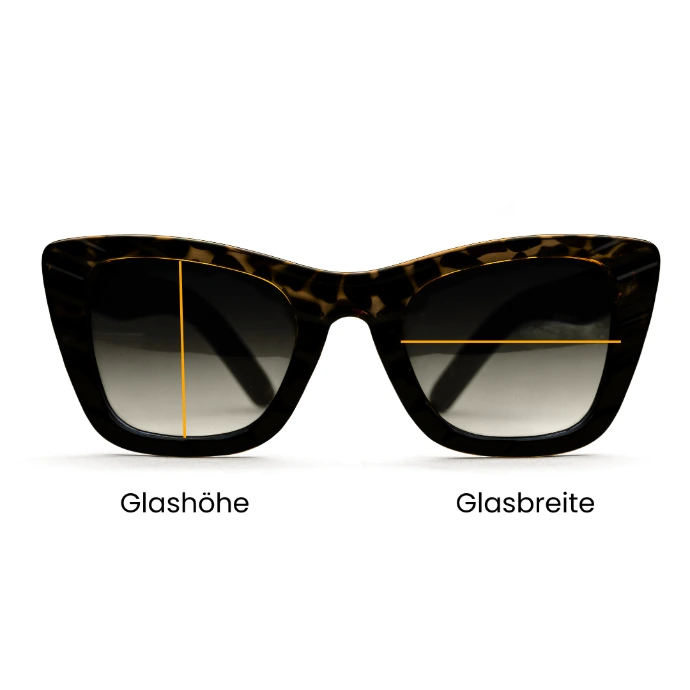
Choose the width and height of the lenses correctly.
The size of the lenses directly influences how much you see. Too small lenses restrict the field of vision, while larger lenses also cover peripheral areas. The lens height and width are measured within the frame.
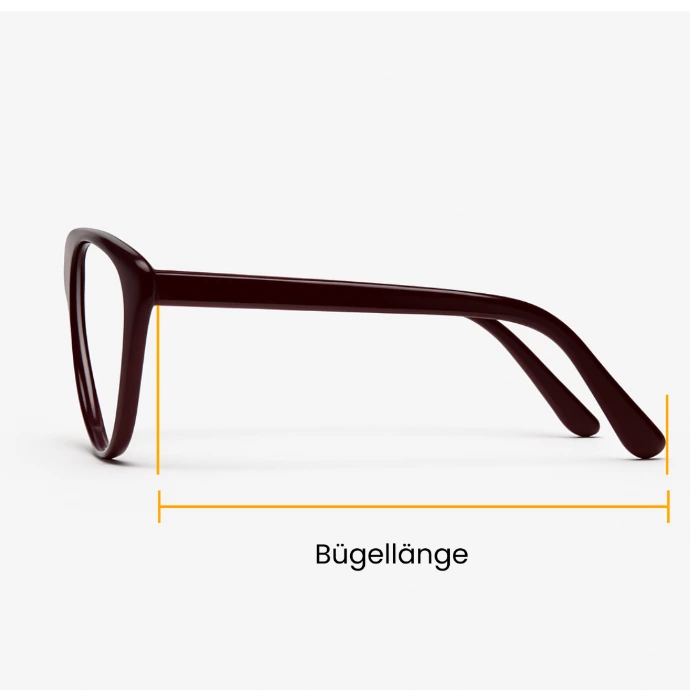
Measuring and Adjusting Temple Length.
The temple length is crucial for ensuring the glasses sit securely and comfortably on your ears. It is measured from the hinge to the end of the temple, and this measurement largely determines how securely the glasses fit on your head.
Is the temple too short, presses the glasses behind the ears and can become uncomfortable. If it is too long, the glasses slide slightly forward. The right temple length ensures stable hold and comfortable wearing all day. Many materials can be optimally adjusted with the help of heat.
Two more ways to determine the right glasses size
The specification on the inside of the temple
Anyone who already wears a pair of glasses that fits comfortably can take advantage of its measurements. On the inside of the temple, there are usually three numerical values in millimeters – they provide information about lens width, bridge width, and temple length. With this information, the appropriate size for a new frame can be easily determined.
It should be noted: These three values describe individual parts of the glasses– not the total width of the eyeglassframe.
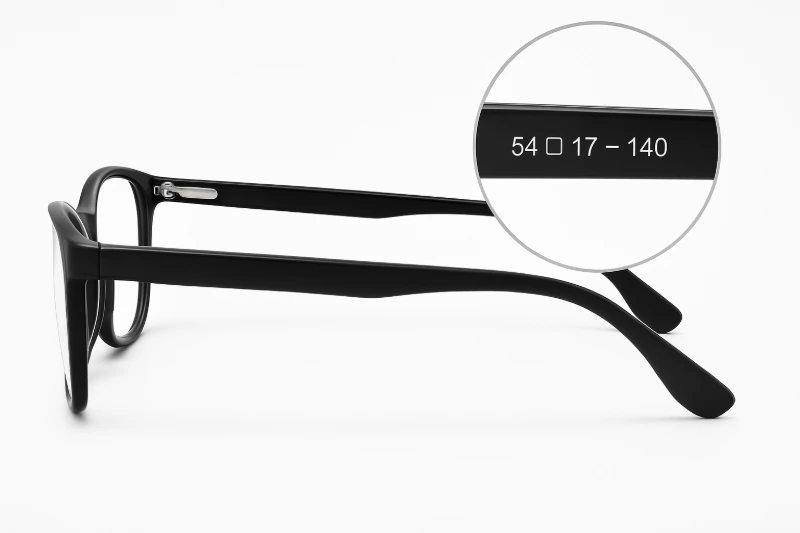
Three More Ways to Determine the Right Glasses Size
If you already wear glasses that fit comfortably, you can use their measurements as a guide. On the inside of the temple, there are usually three numbers in millimeters – indicating the lens width, bridge width, and temple length. These values make it easy to determine the right size for a new frame.
It’s important to note that these three numbers refer to individual parts of the glasses, not the total frame width.
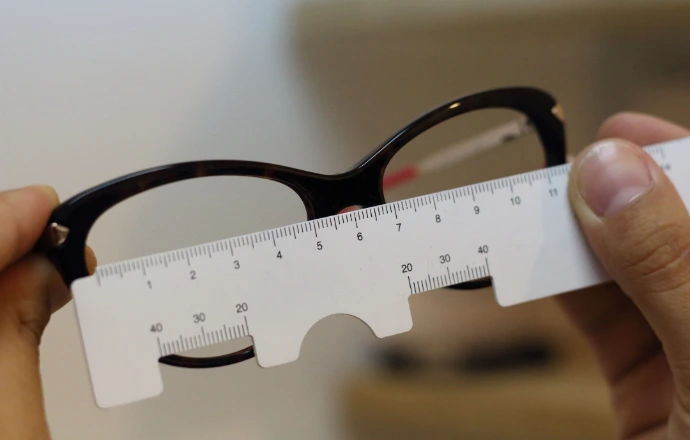
Determining the Glasses Width with a Ruler
If you already wear glasses that resemble your desired shape – for example, square – you can use their width as a reference. Simply measure with a ruler along the top edge of the frame from one outer side to the other.
Important: The ideal glasses width can vary slightly, by about ±2 mm. Many glasses filters account for this tolerance, so models within this range are also displayed. For example, if you wear a rectangular pair that is 138 mm wide, variants between 136 and 140 mm will also fit comfortably.
Determining the Glasses Width with a Ruler
If you already wear glasses that resemble your desired shape – for example, square – you can use their width as a reference. Simply measure with a ruler along the top edge of the frame from one outer side to the other.
Important: The ideal glasses width can vary slightly, by about ±2 mm. Many glasses filters account for this tolerance, so models within this range are also displayed. For example, if you wear a rectangular pair that is 138 mm wide, variants between 136 and 140 mm will also fit comfortably.
Determining the size by using a credit card
Don’t have a pair of glasses to measure? No problem. With a standard credit card, you can easily estimate which size will fit you.
This is how it is done:
- Take a card of your choice in the dimensions of a standard credit card.
- Stand in front of a mirror.
- Hold the card vertically against your nose, with the long edge along the center of your nose.
- Look at where the top corner of the card ends.



The corner extends clearly beyond the eye.
Smaller glasses probably fit best.
(Lens width approx. 47–49 mm)
The corner ends exactly at the outer corner of the eye.
Medium size usually fits best.
(Lens width approx. 50–52 mm)
The corner ends before the outer corner of the eye.
Rather larger glasses are in trend.
(Lens width from 53 mm)
Frequently Asked Questions about glasses size
Glasses are usually specified by three measurements in millimeters – e.g.52 □ 18 145:
- Lens width(e.g. 52 mm)
- Bridge width(e.g. 18 mm)
- Temple length(e.g. 145 mm)
Depending on lens width one often distinguishes between small, medium and large glasses sizes.
A "normal" (average) glasses size for adults is often around alens width of about 50–52 mm. The exact measurements are often found inside the temple, e.g.52 □ 18 145.
If the glasses press on the temples, they are usually too narrow. If they slide down the nose or seem very wide, they are usually too large.
You can find this information on the inside of the temple as part of a complete size specification, e.g., 52 □ 18 145:
52 = lens width
18 = bridge width
145 = temple length
